History Print E-mail

Founded in 1895 by Miss Florence Emily Green, NEGS is now in its one hundred and thirteenth year and has acquired a proud history of achievement in every facet of educating young people to find success and happiness in the world they live in.

The school's story is a fascinating history of determination, strength and faith.


Former Principals

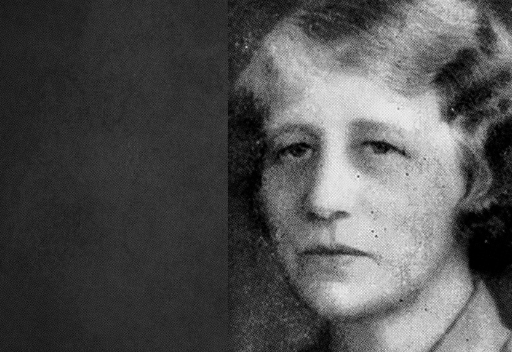
Miss Florence Emily Green (1895-1907)
Miss Green founded NEGS in 1895 with the encouragement of her brother, the Bishop of Armidale, after moving to the city following a successful teaching career in Victoria.
Her aim was to provide an all-round education, with a strong emphasis on Christian values, to prepare students for the challenges of the new century.
The first building at NEGS was named ‘Akaroa’ and contained a large classroom, an office and boarding facilities. Today the building is the school’s administration centre, with the refurbished original classroom now used for meetings and functions and named the ‘WH Lee Room’ after the school’s architect.
Miss Green, suffering from ill health, sold the school to the Anglican Diocese in 1907 and a school Council was appointed.


Miss May Isabella Bird (1907)
Miss Bird is NEGS’ shortest-serving principal, her tenure lasting just three months.
An Arts graduate from the University of Tasmania, Miss Bird was recommended to the school council by foundress Miss Green.  She was apparently well liked by staff and students, but to their dismay she resigned to marry a grazier and move to Victoria soon after arriving at the school.


Miss Margaret Egerton Murray (1907-1913)
Aged 28 and with only five years’ teaching experience, Miss Murray, like her predecessor was an arts graduate from the University of Tasmania and became NEGS’ fourth principal.
Despite her air of fragility and periods of indifferent health, she was regarded as a good teacher, efficient administrator and progressive director.  Enrolments began to increase during her term and the first brick building, later known as "Northern and Southern", was opened in 1911. It contained an assembly hall, gymnasium and boarding facilities.
Miss Murray resigned in 1913 to purchase and become Principal of Abbotsleigh School in Sydney.


Miss Clarinda Murray (1913-1917)

Miss Murray was not related to her predecessor but was in fact the granddaughter of the ‘Father of Federation’ and Prime Minister of Australia, Sir Henry Parkes.
A promising student of Presbyterian Ladies’ College, Sydney, Miss Murray’s formal education was cut short at 16 following the death of her father.
She became governess on a property in Queensland then taught at Ascham and Sydney Church of England Grammar School (SCEGGS).
Her excellent references and teaching record secured her appointment as NEGS fourth principal in 1913.
During her term enrolments increased and new subjects and sporting activities were introduced.
Miss Murray was courted by a student, from adjacent St John’s Theological College and they were married on his ordination as an Anglican clergyman following her resignation from NEGS.


Miss Juliet Mabel Lyon (1918-1925)
NEGS went through grew in size significantly during Miss Lyon’s term as principal.
She oversaw a number of building projects, including new dormitory accommodation, the dining hall and a music block (now the Archives Centre), while enrolments almost doubled.
Born and raised in rural Victoria, Miss Lyon could trace her lineage to the British Royal Family via her noble Scottish ancestry.  After studying at Cambridge University, Miss Lyon was appointed headmistress at St Margaret’s School, Brisbane.  She became NEGS’ fifth principal during the last six months of the Great War.  She resigned in March 1925 to become the founding principal of Marsden School, Bathurst.


Miss Nona Dumolo (1925-1939)
Under Miss Dumolo’s leadership the school went through an unprecedented period of development, with the construction of the main classroom block, assembly hall and chapel.
Miss Dumolo encouraged a greater knowledge of national and world events, exchange visits and sporting events, while fine music and drama productions flourished.  She was born in England but migrated to Australia as a small child, attending private schools and graduating from the University of Sydney with a Bachelor of Arts degree.
Her teaching career began as a governess at Government House, then for 10 years at SCEGGS, Darlinghurst and founding headmistress at SCEGGS, North Sydney.  After two years studying in France, Miss Dumolo was appointed temporary principal of NEGS in 1925, which was made permanent two months later.


Miss Ethel Margaret Colebrook (1939-1959)

NEGS’ longest-serving principal to date, Miss Colebrook lead the school during wartime and its immediate aftermath.
Not surprisingly, this period saw more changes in society and the school community than at any previous time in the school’s history, with shortages, overtaxed accommodation and frequent news of family bereavement affecting the entire school.

Born in Victoria, Miss Colebrook was the daughter of an English migrant who was first the owner and publisher of two newspapers in Ballarat, then an ordained Anglican clergyman.  She gained a Bachelor of Arts degree from the University of Melbourne while working as a governess on country properties Then she became a teacher and headmistress in church schools in Victoria, particularly Melbourne Church of England Grammar and Tintern.
Miss Colebrook was a strong, compassionate principal, loved and respected, who encouraged high ideals of citizenship and personal integrity.  In the post-war years she was instrumental in the establishment of the Junior School, located in the newly built Forster House, and a well-resourced library.


Miss Loyalty Howard (1959-1969)
Miss Howard was born and educated in England, where she began her teaching career before coming to Australia.
Her term of office was a prolific period of development which included major building projects. Chief of these was Saumarez House, the first of the new brick boarding houses, and the Baird Science Block, both completed in 1967. They were a direct result of the building appeal campaign devised by Miss Howard and launched in 1964.
Other buildings erected during her term were the staff residence, Colebrook House in 1960; the Principal’s residence Dumolo Lodge in 1968; extensions to Forster House Junior School and numerous building refurbishments.
The Parents’ and Friends’ Association was formed during Miss Howard’s tenure, as was regular inter-House competition in both sport and the arts.
She returned to NEGS in 1984 to open the Loyalty Howard Arts Centre and again in 1995 as a guest of the school’s centenary celebrations.


Miss Yvonne Grubb (1969-1972)
Miss Grubb introduced innovations and policy changes that were to have a significant effect on NEGS.
She encouraged the enrolment of day girls and overseas students and introduced a new school uniform, including a kilt featuring the distinctive Ferguson tartan.

A swimming pool was installed in the school grounds during her term, the first stage of the new library was opened, a coeducational preschool was established and male teachers were appointed for the first time.  A native of Adelaide, Miss Grubb was educated at Woodlands Girls’ Grammar School and Adelaide University, where she graduated with a Bachelor of Arts degree.


Dr Janis Ann Milburn (1973-1989)
Dr Milburn was the first married Principal of NEGS and her term is the second longest in the school’s history.  Her tenure was a period of growth and progress that saw the opening of three new boarding houses, an arts centre, an intimate theatre – named after Dr Milburn herself, to her embarrassment – while several existing buildings were upgraded.
The second stage of the Aytoun Young Library was also completed, a new hospital constructed and the junior school was moved to the former St John’s Theological College building, now within NEGS’ grounds following its purchase by the school council.
The extensive development program was the result of a 10-year plan instigated by Dr Milburn and the Council.
Dr Milburn had arrived at NEGS following an extensive teaching career in both secondary and tertiary institutions, including educational research in London.  Her qualifications included a Master of Arts degree from Sydney University and she was later awarded a PhD for her research into the history of secondary education.


Mrs Anna Abbott (1990-2000)
Mrs Abbott presided over the opening of the NEGS multi-purpose centre during the school’s centenary celebrations in 1995, as well as the final stage of the Library and Technology Centre. The Archives Centre and Riding School undercover arena opened during her term. Other buildings were refurbished or adapted for new requirements.
Mrs Abbott also oversaw the upgrade of sporting facilities and an expanded Riding School.  An alumnus of the University of Sydney where she graduated with a Bachelor of Arts degree, Master of Letters, Bachelor of Legal Studies and Diploma of Teaching, Mrs Abbott encouraged links and exchange visits with overseas schools in Britain and Asia.


Mrs Helen Trebilcock (2001-2004)
Mrs Trebilcock came to NEGS from South Australia, having gained a Bachelor of Arts degree from the University of Adelaide and a Master of Education from Deakin University.  Like her predecessors she supported the development of the school as a progressive centre of learning. This included the provision, maintenance and upgrading of computer and other technical equipment, the expansion of library services and the greater integration of Junior School students into school activities.


Dr Rebecca Ling (2005 - 2006)
Dr Ling was formerly the Director of Studies at Sommerville House in Brisbane before taking over as Principal of NEGS in 2005. Dr Ling received a Bachelor of Arts (hons) from the University of Melbourne, a Bachelor of Education from UNE and received her PhD in Education at the University of Queensland. Dr Ling instigated the NEGS Middle School and continued the upgrade of the school's computers and technical equipment.